Yoga with Essential Oils and Diffuser Ritual
Create a calm yoga ritual at home with essential oils and a diffuser. Simple steps for pairing scent with stretching, plus safety tips. A practical guide with.
By the AromaTouch Explained Team — Home massage rituals & doTERRA enthusiasts
A yoga mat rolled out on the floor, a cushion nearby, and the room filled with the soft scent of lavender. That is the scene many of us imagine when we hear about combining yoga with essential oils. So how do you actually build that ritual?
The direct answer is simple: you pair a short, gentle stretching session with a diffuser running 3-5 drops of one or two essential oils in 100 ml of water, for 30-45 minutes, in a ventilated room. The scent becomes an anchor, the same oil used every time, so your body and mind start to associate that specific aroma with slowing down. It is not about which oil is the "right" one. It is about repetition, warmth, and a moment of calm that belongs only to you.
Below we walk through how to set up this ritual at home, which oils to consider, and how to do it safely.
Choosing Oils for Your Yoga Practice
Essential oils are a sensory layer. Traditional associations guide us here, not guaranteed effects. Lavender is known for its soft, sweet floral note, often paired with unwinding. Frankincense and Sandalwood are deep, resinous base notes that encourage long, slow breathing. Cedarwood brings a grounding, woody feel.
What matters most is consistency. Pick one oil and use it every time you practice. In our experience, this repetition is what turns a scent into a signal. The moment you open the bottle, your shoulders already start to soften.
Quick Comparison of Yoga-Friendly Oils
| Oil | Aromatic Profile | Common Ritual Use |
|---|---|---|
| Lavender | Soft, floral, sweet | Evening unwinding, slow flow |
| Frankincense | Deep, resinous, warm | Meditation, breathwork |
| Cedarwood | Woody, grounding | Standing poses, rooting |
| Sandalwood | Rich, creamy wood | Closing poses, stillness |
| Wild Orange | Bright, citrusy | Morning practice, gentle lift |
Remember that Wild Orange is a cold-pressed citrus oil. If you apply it to skin before sunrise yoga, wait about 12 hours before direct sun exposure.
Setting Up Your Diffuser Ritual
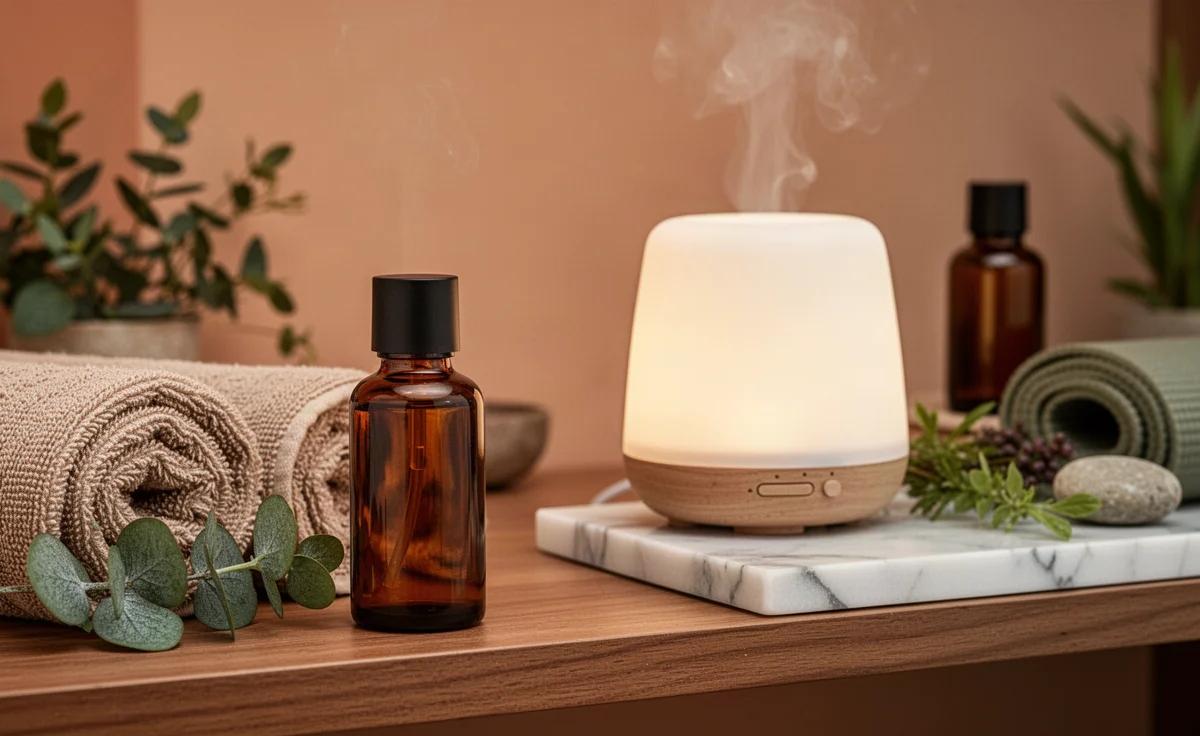
The diffuser is not a background afterthought. It is the container for the whole experience. Here is a step-by-step setup:
- Fill your diffuser with 100 ml of clean water, or whatever amount your model specifies.
- Add 3-5 drops of your chosen essential oil. Start with 3 if you are new to this.
- Place the diffuser at least an arm's length from your mat, not pointing directly at your face.
- Run it for 30-45 minutes, not continuously. A ventilated room keeps the scent fresh without saturating your nose.
- Turn it off after the session. The scent lingers gently, which is often enough.
- Wipe the diffuser dry between uses to keep residue from building up.
For a more structured breath practice on the mat, try a simple box breath: inhale for four counts, hold for four, exhale for four, hold for four. The steady rhythm pairs naturally with a diffuser misting in the background. If you want to explore this in more depth, see our guide on blending aromatherapy into your yoga flow.
Oils on the Mat: Blends and Touch
Diffusing is one route. A diluted oil on the wrists or neck is another. If you want skin contact during practice, dilute properly: 1% for sensitive skin or facial use, roughly 1 drop per 5 ml of carrier oil. For body application in adults, 2-3% is typical, so 2-3 drops per 5 ml of carrier.
Balance is a popular grounding blend. Serenity is often used for evening stillness. Adaptiv has a bright, herbaceous lift. Any of these can be diluted and rolled onto the inner wrist before you begin, then brought to the nose during a forward fold or a seated pause.
What we recommend most often is one drop of AromaTouch diluted in a teaspoon of Fractionated Coconut Oil, massaged into the feet before a slow yin-style session. It is warm, minty, and quietly grounding without being overwhelming.
A small patch test on the inner elbow, left for 24 hours, is wise before the first skin application. Avoid the eye area and any mucous membranes.
A Simple Evening Yoga and Oil Sequence
- Diffuse 3 drops of Lavender for 30 minutes while you set up your mat.
- Dilute 1 drop of Balance in 5 ml of Fractionated Coconut Oil and roll onto the wrists.
- Move through five minutes of gentle neck and shoulder rolls, breathing slowly.
- Hold a seated forward fold for one minute, bringing the wrists toward the face with each inhale.
- Finish in a lying position, eyes closed, for three minutes. No oil on the face.
Frequently Asked Questions
Can I use any essential oil for yoga?
Yes, but some fit certain moods better than others. Resinous oils like Frankincense and Sandalwood suit slow practices. Citrus oils like Wild Orange are brighter. The best oil is one you enjoy and can use consistently.
How many drops should I put in my diffuser?
Use 3-5 drops per 100 ml of water. Start with 3 if you are sensitive to scent. Run the diffuser for 30-45 minutes, not all day, and keep the room ventilated.
Should I apply essential oils to my skin before yoga?
Only if diluted. Use 1% for facial or sensitive skin, 2-3% for body use in adults. Always patch test first. Avoid citrus oils if you will be in direct sun within 12 hours.
Are essential oils safe around children during yoga?
Keep diffusers away from children. Under two years old, do not apply essential oils to their skin, and do not diffuse in the same room while they are present. For older children, use the lowest amount, 3 drops per 100 ml, and short 30-minute sessions.
Can diffusing essential oils replace my yoga practice?
No. Diffusing adds a sensory layer, but the practice itself is the stretching, breathing, and stillness. The scent supports the ritual. It does not do the work for you.
Conclusion
Yoga with essential oils works because it is simple, repeatable, and yours. One mat, one diffuser, one oil you love, and fifteen quiet minutes. The ritual builds itself over time.
Explore doTERRA essential oils
This content is for general information only and is not medical advice. Essential oils are not intended to diagnose, treat, cure, or prevent any disease; consult a qualified healthcare professional before use.