Relaxing Oil Massage at Home, A Gentle Guide
Learn how to set up a relaxing oil massage at home with safe dilution, simple steps and a calming doTERRA oil routine. A wellness ritual for slow evenings.
By the AromaTouch Explained Team — Home massage rituals & doTERRA enthusiasts
It's Sunday evening, the house is finally quiet, and your hands are itching to slow down. A relaxing oil massage at home is a simple wellness ritual: you warm a little diluted oil in your palms, use slow, unhurried strokes on your hands, feet, neck or back, and let the scent and warmth mark the end of a busy day. You need only a carrier oil, one or two essential oils, a towel and about fifteen minutes. The key is safe dilution: for the body in adults, we suggest 2-3% (2-3 drops of essential oil per 5 ml of Fractionated Coconut Oil). This is a home ritual for comfort and calm, not a healthcare treatment and not a substitute for a qualified professional.
Setting Up Your Calm Space
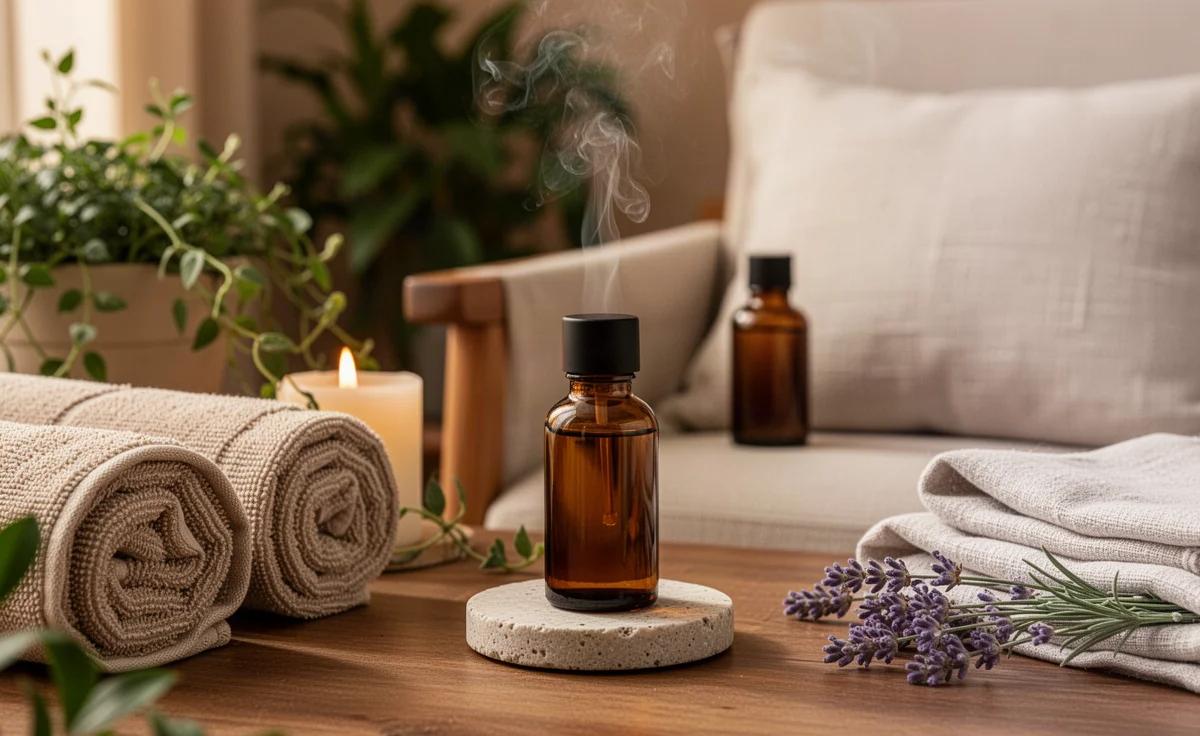
The setting matters as much as the oil. In our experience, people who dim the lights, warm the room and put their phone in another room get far more out of the same fifteen minutes.
- Warmth: a cold room makes everyone tense up, so close the window and lay a towel underneath you.
- Light and sound: low, warm light and quiet music or silence.
- Scent: a short diffuser session (3-5 drops per 100 ml of water, 30 minutes) before you start, then switch it off.
- Timing: repetition builds the association. The same scent at the same hour tells your mind that the evening is winding down.
Choosing and Diluting Your Oils
Several oils suit an evening ritual. Lavender is the classic soft, floral choice, and Roman Chamomile is gentler for anyone who finds lavender too strong. Cedarwood and Vetiver add a grounded, woody base note. If you like a ready-made blend, Balance and the AromaTouch blend are popular for this kind of ritual. For a brighter, citrusy note, Wild Orange is lovely, but it is photosensitive: avoid direct sun on treated skin for 12 hours. A sensible plan is to see which oils suit a home massage before you buy several at once.
| Who | Dilution | Drops per 5 ml carrier |
|---|---|---|
| Face, sensitive skin, adults over 65 | 1% | about 1 drop |
| Body, healthy adults | 2-3% | 2-3 drops |
| Children under 2 | No essential oils on skin | 0 (carrier oil only) |
Always do a patch test first: one diluted drop on the inner elbow, then wait 24 hours. Keep oils away from eyes, ears and mucous membranes. If you are pregnant, nursing, or have a medical condition, talk to your doctor before using essential oils on skin.
A Simple Step-by-Step Ritual
- Prepare the blend. Put 5 ml of carrier oil in a small bowl and add 2-3 drops of your chosen essential oil.
- Warm your hands. Rub your palms together for a few seconds so the oil feels pleasantly warm.
- Start with the hands. Use slow circles on one palm, then the other, with gentle pressure.
- Move to the feet. Long, smooth strokes from heel to toes, paying attention to the scent and warmth.
- Finish at the neck and shoulders. Keep the pressure light and steady, and breathe slowly.
- Rest. Sit quietly for a few minutes before you move on.
If you'd like a longer walkthrough, our guide to relaxing oil massage at home made simple covers the full routine. For a broader introduction to how research views aromatherapy and touch, the National Institutes of Health is a reliable starting point.
Avoiding Common Mistakes During Your Ritual
Even a simple routine can become less effective or irritating when small details slip.
- Rushing the patch test. The 24-hour wait feels unnecessary until a rash appears. Test every new oil or blend before using it on larger areas.
- Using too much oil. A little goes a long way. Start with half a teaspoon of carrier oil; if your skin drinks it up, you can add a bit more.
- Pouring essential oil directly onto skin. Always mix into carrier oil in a bowl or bottle first. Direct contact can irritate even familiar oils.
- Tight shoulders while massaging. If you are crouching awkwardly, your hands will feel stiff. Sit comfortably, support your arms, and relax your own shoulders as you work.
- Skipping the rest step. Jumping up to check your phone or do dishes undoes the calm. Stay seated, wrap yourself in a towel, and let the warmth settle for at least two minutes.
Adapting the Ritual When You Only Have Ten Minutes
You can keep the habit alive on busy nights by shrinking the scope, not the attention.
- Feet only. Four minutes on one foot, four on the other, two minutes of quiet rest. Feet carry the day’s tension and respond quickly to slow, steady strokes.
- One hand each. If massaging a partner, alternate hands for a short session. It feels surprisingly complete when you focus on each finger and knuckle.
- Neck and jaw only. Light upward strokes on the back of the neck, then tiny circles at the jaw hinge using your middle fingers. Keep pressure gentle.
- Keep a premixed bottle ready. Mix your 2–3% blend in advance and label it with the date and oils used. This removes the measuring step and makes a short session feel effortless.
Frequently Asked Questions
How often can I do a relaxing oil massage at home? There is no fixed rule. Many people enjoy a short version a few evenings a week. It's a comfort ritual, so go by how it feels and keep each session unhurried.
Do I really need a carrier oil? Yes. Essential oils are highly concentrated and should be diluted before touching skin. A carrier such as Fractionated Coconut Oil is light, stable and doesn't stain, which is why it suits massage.
Is this the same as professional massage therapy? No. This is a home wellness ritual built around touch, scent and calm. If you have persistent discomfort or any health concern, see a doctor or qualified professional.
Conclusion
A relaxing oil massage at home is really about slowing down: warm hands, a calming scent and a repeatable routine. Start with a patch test, keep your dilution clear, and make it a ritual you look forward to.
This content is for general information only and is not medical advice. Essential oils are not intended to diagnose, treat, cure, or prevent any disease; consult a qualified healthcare professional before use.
Explore doTERRA essential oils